
Confluence of Mountain Ranges
- Home
- Confluence of Mountain Ranges
Confluence of Mountain Ranges
Where Three Great Mountain Ranges Meet: The Himalaya, Karakoram and Hindu Kush in Pakistan
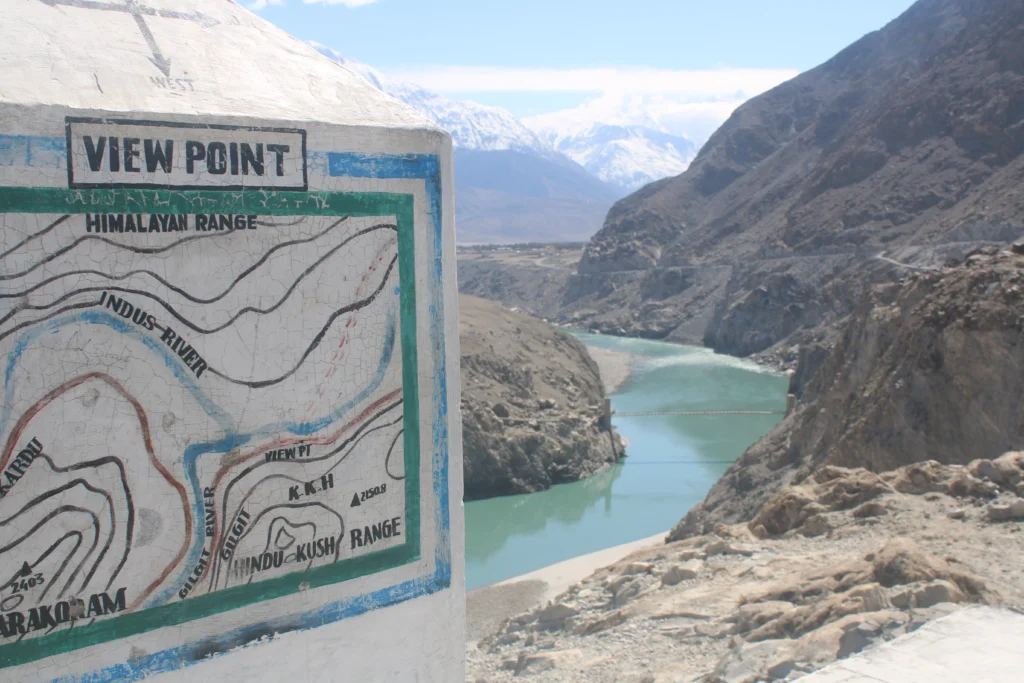
Northern Pakistan is home to some of the most spectacular mountain landscapes on Earth. Here, the mighty Himalaya, Karakoram and Hindu Kush mountain ranges come together in the remarkable geographical region of Gilgit-Baltistan, creating a landscape of towering peaks, deep valleys, powerful rivers and extraordinary natural beauty.
Near Jaglot, along the legendary Karakoram Highway, travellers can visit the celebrated junction of these three great mountain systems. This remarkable area offers a glimpse into the geological forces that have shaped the mountains of northern Pakistan and provides a memorable stop for travellers exploring the region.
For mountain lovers, photographers, geographers and adventure travellers, the confluence of the three mountain ranges is one of the most fascinating places to discover in Pakistan.
The Meeting of Three Mountain Giants
The Himalaya, Karakoram and Hindu Kush are among the world’s most remarkable mountain systems. Their landscapes are shaped by immense geological forces, creating some of the highest peaks, deepest valleys and largest glaciers on the planet.
The junction of these three ranges is located near Jaglot in Gilgit-Baltistan, close to where the Gilgit River joins the mighty Indus River. The area is widely recognized as a geographical landmark representing the close convergence of these three mountain systems.
The surrounding landscapes reveal the extraordinary diversity of the region, from rugged mountain slopes and river valleys to snow-covered peaks and high-altitude terrain.
This geographical setting makes Gilgit-Baltistan one of the most fascinating destinations for travellers interested in mountain geography, natural landscapes and adventure tourism.
The Himalaya: The Mountain Range of Nanga Parbat
The Himalaya extends into northern Pakistan, where its western reaches include the remarkable mountain region surrounding Nanga Parbat.
Nanga Parbat, rising to 8,126 metres, is one of the world’s highest mountains and a defining landmark of Pakistan’s western Himalaya.
The mountain’s dramatic slopes, glaciers, alpine meadows and surrounding valleys create some of the most breathtaking landscapes in the country.
The Himalayan region of Pakistan offers a variety of travel experiences, including trekking, scenic journeys, camping, nature exploration and visits to traditional mountain communities.
Destinations such as Astore, Fairy Meadows, Rama Valley and Deosai are among the region’s most celebrated places for nature and mountain tourism.
The Karakoram: Home to K2 and Legendary Glaciers
The Karakoram is one of the world’s most spectacular mountain ranges, known for its towering peaks, immense glaciers and dramatic landscapes.
Located primarily in Gilgit-Baltistan, the Karakoram is home to K2, the world’s second-highest mountain, along with numerous other high peaks and extensive glacier systems.
The region attracts mountaineers, trekkers, photographers and adventure travellers from across the world.
Some of the most renowned destinations in the Karakoram include:
K2 and the Baltoro Glacier
Concordia
Broad Peak
Gasherbrum peaks
Rakaposhi
Batura Glacier
Hunza Valley
Nagar Valley
Shigar Valley
Khaplu Valley
The Karakoram offers an extraordinary combination of mountain scenery, remote valleys, glacier landscapes and cultural experiences, making it one of the most remarkable adventure travel destinations in Asia.
The Hindu Kush: Mountains, Valleys and Culture
The Hindu Kush extends through western parts of northern Pakistan, including the Chitral region and surrounding mountain landscapes.
The range is known for its high peaks, rugged valleys, mountain passes and traditional communities. Tirich Mir, the highest peak of the Hindu Kush, dominates the mountain landscape of Upper Chitral.
The Hindu Kush region offers travellers opportunities to explore remote valleys, cultural traditions, mountain scenery, trekking routes and unique communities.
Chitral, Upper Chitral and the Kalash valleys are among the most fascinating destinations in the region, combining spectacular landscapes with distinctive cultural heritage.
For travellers interested in mountain culture and nature, the Hindu Kush offers a different yet equally fascinating experience compared with the Karakoram and Himalaya.
The Confluence of the Gilgit and Indus Rivers
Near the junction of the three mountain ranges, the Gilgit River meets the Indus River, creating another remarkable natural landmark in the region.
The Indus River is one of Asia’s major rivers and plays an important role in the geography, ecology and livelihoods of Pakistan.
The rivers and their tributaries drain vast mountain landscapes, carrying water from snowfields, glaciers and high-altitude regions towards the plains of Pakistan.
The confluence near Jaglot provides travellers with an opportunity to appreciate the relationship between mountain geography, river systems and the landscapes of northern Pakistan.
Together, the mountain junction and river confluence make this area an exceptional destination for photography, sightseeing and understanding the natural geography of Gilgit-Baltistan.
Visiting the Junction of Three Mountain Ranges
The junction of the Himalaya, Karakoram and Hindu Kush near Jaglot is accessible along the Karakoram Highway and can be included in journeys between Gilgit, Chilas and Skardu.
The viewpoint is a convenient stop for travellers exploring northern Pakistan by road. Visitors can appreciate the surrounding landscapes, photograph the area and learn about the geographical significance of the three mountain ranges.
The location is particularly suitable for travellers undertaking longer journeys through Gilgit-Baltistan, including trips to Hunza, Skardu, Astore and other mountain destinations.
A visit can easily be incorporated into a broader itinerary exploring the Karakoram Highway and the landscapes of northern Pakistan.
The Best Time to Visit
The junction of the three mountain ranges can generally be visited throughout the year when road and weather conditions permit.
Spring: Spring brings warmer temperatures to the lower valleys and is a beautiful season for scenic journeys through northern Pakistan.
Summer: Summer is a popular season for travelling through Gilgit-Baltistan, exploring mountain valleys and undertaking outdoor adventures.
Autumn: Autumn offers beautiful colours in many valleys of northern Pakistan and is an excellent season for photography and scenic road trips.
Winter: Winter journeys can offer dramatic mountain scenery, but weather, snow and road conditions may affect accessibility and travel plans.
Explore the Confluence of Mountain Ranges with Silk Route Adventures
At Silk Route Adventures, we specialize in exploring the landscapes, culture and natural heritage of northern Pakistan.
Being natives of the mountain regions of Gilgit-Baltistan, we have a deep connection to the landscapes and communities of the Karakoram, Himalaya and Hindu Kush. Our local knowledge and experience help us create journeys that allow travellers to discover the region beyond the usual sightseeing stops.
We organize private tours, customized itineraries, scenic road journeys, cultural experiences, trekking adventures and nature tours across northern Pakistan.
The junction of the three mountain ranges near Jaglot can be included in journeys through Gilgit-Baltistan, along the Karakoram Highway, towards Hunza, Skardu, Astore and other destinations.
Our services include:
Private and customized tours of northern Pakistan
Karakoram Highway road trips
Hunza and Skardu tours
Cultural and heritage journeys
Trekking and adventure tours
Wildlife and nature experiences
Photography journeys
Transportation and ground logistics
Local guides and travel assistance
Whether you are interested in mountain landscapes, cultural exploration, photography or adventure, we can help you plan a journey through some of the most extraordinary scenery in Pakistan.
Discover the Mountains of Pakistan
The convergence of the Himalaya, Karakoram and Hindu Kush represents one of the most fascinating geographical landscapes in northern Pakistan.
From the glaciers and towering peaks of the Karakoram to the Himalayan landscapes of Nanga Parbat and the cultural valleys of the Hindu Kush, the region offers an extraordinary diversity of natural and cultural experiences.
A journey to the junction of these mountain ranges is an opportunity to discover the geography, history, landscapes and communities that make Gilgit-Baltistan one of the most remarkable travel destinations in the world.
Silk Route Adventures – Journey Beyond Borders.
Explore northern Pakistan with us and discover where the great mountain worlds come together.
Visit https://silkrouteadventures.com/ to plan your journey.